Plant Care & Maintenance

How to Clean Artificial Plants Without Damaging Them

How to Clean Artificial Plants Without Damaging Them

Artificial plants bring greenery into a room without asking for sunlight, water, fertiliser, or patient care. Still, they are not completely maintenance-free. Dust settles on broad leaves, grease clings to plants placed near kitchens, and decorative arrangements slowly lose their fresh appearance. A plant that once looked convincing can begin to seem dull when every leaf carries a visible grey coating. Cleaning artificial greenery is simple, but the wrong approach can fade its colour, loosen glued parts, bend stems, or...

Small Artificial Plants for Table and Desk Decoration

Small Artificial Plants for Table and Desk Decoration

Sometimes a table needs only one small change to feel completely different. A few scattered pens, a coffee cup, and a tangle of chargers can quickly make the surface feel busy, but a small artificial plant brings in a fresh, calming detail. Its touch of greenery helps the space look brighter, more balanced, and thoughtfully arranged. Compact faux greenery works particularly well on desks and tables because it adds colour without demanding valuable space. There is no watering schedule to...

How to Improve Overall Plant Health and Growth?

How to Improve Overall Plant Health and Growth?

Healthy plants rarely come from one miraculous fertiliser, a fancy pot, or a secret gardening trick. Their growth depends on several small conditions working together. Light powers their leaves, water carries nutrients through their tissues, soil supports their roots, and consistent care helps them handle changes without becoming stressed. The encouraging part is that you do not need expert gardening skills to improve plant health. You simply need to understand what each plant is communicating. Drooping leaves, faded colour, slow...

Best Artificial Palm Plants for Home Decoration

Best Artificial Palm Plants for Home Decoration

Palm plants have a wonderful way of changing the mood of a room. Their long leaves, graceful shapes, and generous spread can make an ordinary corner feel relaxed and thoughtfully decorated. Unfortunately, real palms are not always as carefree as they appear. Some need bright filtered sunlight, steady humidity, careful watering, and protection from sudden temperature changes. One forgotten watering session or a poorly lit corner can quickly lead to brown tips and drooping leaves. Artificial palm plants offer the...

Why Is Mold Growing in Your Plant Soil?

Why Is Mold Growing in Your Plant Soil?

You walk over to admire your favourite houseplant and notice something suspicious on the soil. A soft white layer has appeared overnight, making the pot look as though it has been lightly dusted with flour. Sometimes the growth is grey, yellow, or even slightly green, which makes the situation feel far more alarming. Mold on plant soil is common, especially among indoor plants, and it does not automatically mean your plant is doomed. Most surface mold feeds on decaying organic...

How to Promote Strong and Healthy Plant Roots?

How to Promote Strong and Healthy Plant Roots?

The most impressive part of a healthy plant is often the part you never see. Leaves may look glossy, flowers may steal attention, and new shoots may create excitement, but the roots are quietly doing most of the serious work underground. They absorb water, collect nutrients, anchor the plant, store energy, and help it cope with changing conditions. A weak root system eventually shows up above the soil. Growth slows, leaves lose colour, stems become limp, and the plant may...

Understanding Micronutrient Deficiency in Plants

Understanding Micronutrient Deficiency in Plants

Plants can look healthy one day and start showing strange changes the next. Maybe the new leaves are coming in pale, the growth looks weak, or the foliage develop unusual spots. It is obvious to blame watering or sunlight, but sometimes the problem comes down to something much smaller: micronutrients. Micronutrients are essential nutrients that plants need in very small quantities. They help with processes such as chlorophyll production, root development, new growth, and flowering. When a plant does not...

How to Treat Black Spots on Plant Leaves?

How to Treat Black Spots on Plant Leaves?

One day, the plant appears perfectly healthy, and soon its leaves are covered with suspicious black circles, yellow edges, or irregular patches. Although the damage may look alarming, quick and sensible care can often stop the problem before it spreads throughout the plant. Black spots are commonly associated with fungal infections, especially on roses, fruit plants, vegetables, and ornamental foliage. However, fungi are only one possible cause. Bacteria, pest activity, excessive moisture, sun damage, and poor growing conditions can create...

Why Do Plants Need Micronutrients for Healthy Growth?

Why Do Plants Need Micronutrients for Healthy Growth?

Plants need more than sunlight, water, and good soil to grow well. They also need a mix of nutrients to produce healthy leaves, build strong roots, and keep growing steadily. Most gardeners know about the big three nutrients, nitrogen, phosphorus, and potassium, but there is another group that often gets overlooked: micronutrients. Micronutrients play a big role in keeping plants healthy. Nutrients such as iron, zinc, boron, and manganese help with everything from photosynthesis to new cell growth. When a...

Artificial Vertical Gardens: A Complete Guide for Homes and Offices

Artificial Vertical Gardens: A Complete Guide for Homes and Offices

A blank wall can make even a thoughtfully decorated room feel unfinished. Paint may add colour, artwork can introduce personality, and shelves offer practical storage, yet some spaces need a softer and more natural visual element. Artificial vertical gardens provide exactly that effect without creating a demanding maintenance routine. These gardens use realistic artificial foliage arranged across a wall, frame, panel, partition, or freestanding structure. They bring the calming appearance of greenery into places where natural plants may struggle because...

How to Prevent Root Rot in Potted Plants?

How to Prevent Root Rot in Potted Plants?

Root rot is one of the most common problems potted plant owners faces. And unfortunately, it can become serious before you even realise something is wrong. Plant may start looking tired, with yellow leaves, drooping stems, or slow growth. Your first instinct might be to give it more water, but sometimes that is exactly what makes the problem worse. Root rot usually happens when the roots stay wet for too long and do not get enough oxygen. Over time, the...

Why Are Your Plant Leaves Turning Yellow?

Why Are Your Plant Leaves Turning Yellow?

When a once-green, healthy-looking plant suddenly starts developing yellow leaves, it can be a little worrying, right? You may start wondering if you’ve watered it too much, not enough, moved it to the wrong spot, or simply done something wrong. But don’t panic. Yellow leaves are one of the most common ways plants show that something isn’t right. Sometimes, yellowing is completely normal, especially when older leaves are reaching the end of their life. Other times, it could mean your...

Creative Balcony Decoration Ideas with Artificial Plants

Creative Balcony Decoration Ideas with Artificial Plants

A balcony can be much more than just a small space where you dry clothes or store unused items. With a little creativity, it can become the most relaxing corner of your house. You can enjoy your morning tea, read a book, spend time with family, or simply take a break after a long day. The good news is that you do not always need real plants to create a green and refreshing balcony. Artificial plants can help you achieve...

Common Houseplant Problems and How to Fix Them?

Common Houseplant Problems and How to Fix Them?

Houseplants can make a home feel fresher, calmer, and more inviting. But even healthy-looking plants can suddenly start showing signs of trouble. One day, everything seems fine, and the next, you notice yellow leaves, brown tips, drooping stems, or tiny insects around the soil. It can be frustrating, especially when you have no idea what went wrong. The good news is that most houseplant problems are caused by a few common issues. Your plant may be getting too much water,...

Tips on How to Identify Common Fungal Diseases in Plants

Tips on How to Identify Common Fungal Diseases in Plants

A healthy garden rarely stays flawless for long. One week, every leaf looks glossy and cheerful, and the next, mysterious spots, fuzzy patches, or drooping stems begin to appear. Fungal diseases are often responsible for these changes, especially when plants experience high humidity, poor airflow, prolonged dampness, or overcrowding. The tricky part is that nutrient deficiencies, insects, bacteria, and watering problems can produce surprisingly similar symptoms. Correct identification begins with patient observation rather than a hurried guess. The colour, shape,...

Proven Ways for Natural Pest Control for Plants

Proven Ways for Natural Pest Control for Plants

A few curled leaves, tiny holes, or sticky stems can quickly turn a peaceful gardening session into a miniature crime investigation. Aphids gather beneath leaves, caterpillars chew through fresh growth, and fungus gnats seem to appear from nowhere. Reaching for a powerful chemical spray may feel convenient, but it can also harm pollinators, beneficial insects, pets, and the natural balance of the garden. Natural pest control takes a more thoughtful approach. Instead of trying to eliminate every insect in sight,...

Methods for How to Sterilize Potting Soil

Methods for How to Sterilize Potting Soil

Potting soil may look perfectly clean, but it can sometimes contain unwanted fungi, bacteria, insect eggs, tiny pests, or weed seeds that may cause problems later. This is where sterilizing the soil can help. Sterilizing potting soil means heating it to reduce or kill many of these unwanted organisms before you use it. It can be helpful when reusing soil from a plant that had pests or disease, starting seeds, dealing with fungus gnats, or using garden soil for indoor...

Steps for Starting a Container Garden

Steps for Starting a Container Garden

Gardening often brings to mind wide lawns, carefully arranged flower beds, and sheds filled with mysterious tools. Fortunately, plants are far less demanding about property ownership than people. Give them a suitable container, enough sunlight, nutritious soil, and regular care, and they can flourish on a balcony, windowsill, terrace, doorstep, or compact patio. A container garden is particularly useful for beginners because it keeps the growing process manageable. You can start with a few pots, learn how different plants behave,...

How to Mix Soil for Plants?

How to Mix Soil for Plants?

Healthy plant growth begins below the surface. Leaves may attract the most attention, flowers may earn all the compliments, and fruit may provide the final reward, yet roots quietly support the entire operation. When those roots have access to air, moisture, nutrients, and enough space to spread, the plant has a strong foundation for growth. Garden soil rarely provides that balance on its own, especially when placed inside a pot. It may become dense after watering, restrict airflow, retain excessive...
What are the Benefits of Using Artificial Plants in Home Decor?

What are the Benefits of Using Artificial Plants in Home Decor?

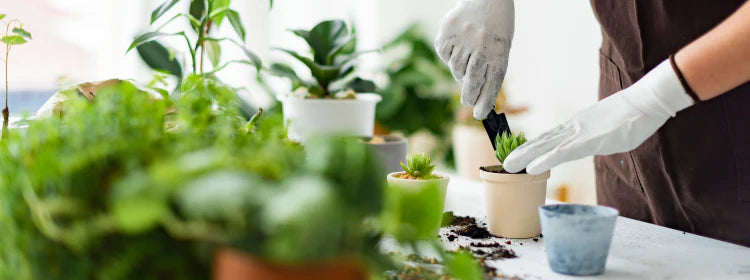
A little greenery can make a home feel brighter, fresher and more welcoming. There is just something distinct about having plants around. They bring colour, softness and a natural feel to a room, making even a simple space feel a little more alive. But as much as we love real plants, they are not always easy to care for. They need plenty of sunlight, regular watering, and just the right amount of attention. And let’s be honest, not all of...

How to Grow Orchids Indoors in the Indian Climate?

How to Grow Orchids Indoors in the Indian Climate?

Growing orchids indoors feels like a dream for many plant lovers in India. These blooms, often seen as exotic and delicate, are admired for their elegance and variety. Yet, despite their reputation for being finicky, orchids can thrive indoors if you understand their needs and adjust them to the Indian climate. With the right mix of light, air, and care, you can enjoy vibrant orchids flowering in your home throughout the year.  Understanding Orchids and Their Nature  Orchids sound fancy,...

How to Prune & Shape Your Indoor Plants for Health & Aesthetics?

How to Prune & Shape Your Indoor Plants for Health & Aesthetics?

There’s a quiet magic in caring for houseplants. We water them, give them food, and turn them toward the sunlight, feeling happy every time a new leaf shows up. But sometimes, that growth can become a bit chaotic. This is where the art of pruning comes in. For many plant lovers, the thought of cutting back their precious greens can feel scary. It feels counterintuitive, even destructive. But in reality, a thoughtful prune is one of the most profound acts...